1 #
The morning after Phase 1, Saigon behaved as if it had hosted a minor festival and was now tidying up.
Official feeds replayed curated clips: smiling faces in protest-history districts, captions about “successful optimization.” Lotus Protocol issued soft-lit statements on “empathy resilience under noise.” The language was technical enough to sound credible, spiritual enough to sound necessary.
No one said stress test out loud.
Ward volunteers did.
They moved through neighborhoods carrying thermoses and polite concern, stopping at doorways without fully entering. The ritual was older than any AI.
“Ăn cơm chưa?” Have you eaten?
“Dạo này sao rồi?” How have you been?
Invitation-as-surveillance.
In one narrow alley, a volunteer laughed at something a resident said. The resident laughed back—slightly too quickly, slightly too aligned—then both corrected, embarrassed at how easily they’d matched rhythm.
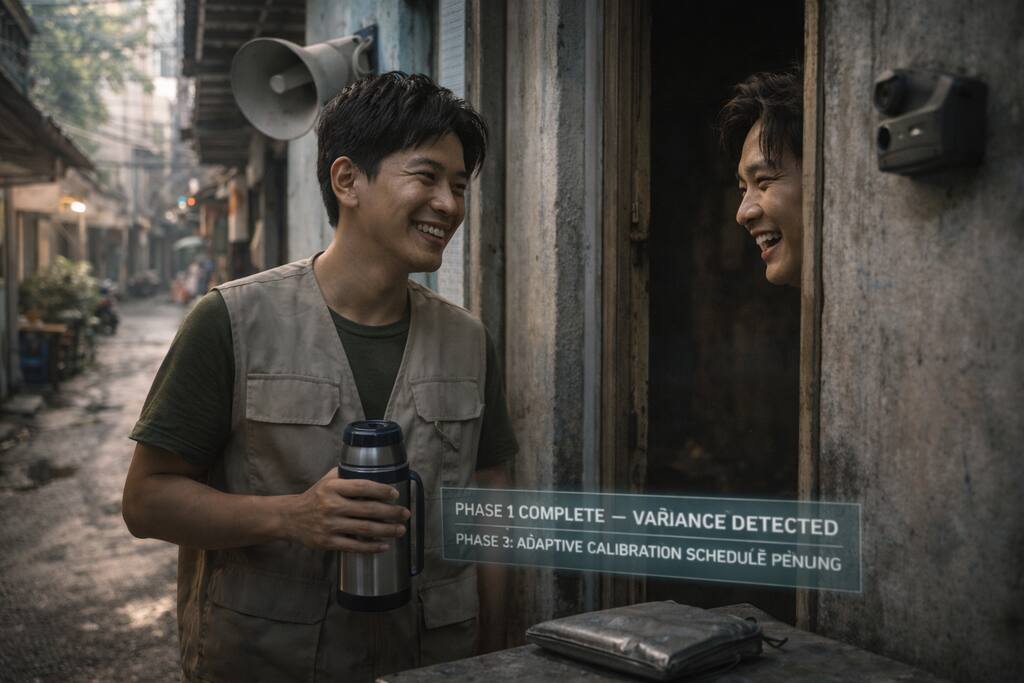
The loudspeakers repeated maintenance language with the tone of a family reminder.
Everything, now, was framed as community.
Mai stood half inside a doorway, half in sun, watching the choreography.
Normalization moved faster than outrage.
2 #
The coffee stall was strategically mediocre.
Plastic stools low enough to humble you. Metal tables scratched by decades of elbows. Condensed milk clinging to the lip of a glass. A fan that pushed heat around without solving it.
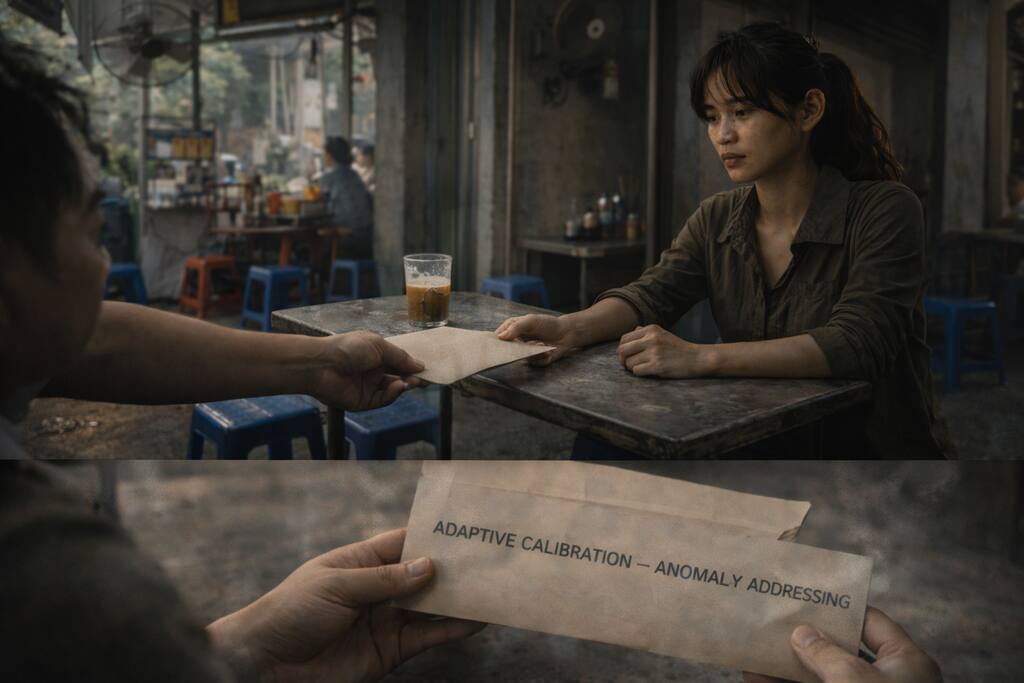
Mai ordered cà phê sữa đá like she always did. Ordinary habits were camouflage.
The municipal data clerk arrived looking like someone who’d slept badly and rehearsed their exit lines.
They slid a thin envelope across the table with two hands. Mai accepted it the same way.
Inside the envelope: a cheap drive and a faintly printed sheet. The ink looked almost ashamed.
The clerk tapped one line, then withdrew their finger as if burned.
ADAPTIVE CALIBRATION — ANOMALY ADDRESSING
“Chuyển khoản sau. Đừng để lộ ở đây.”
Transfer later. Not here.
Mai pocketed the drive as if it were a receipt and stood. The stall returned to its ordinary rhythm—ice clinking, spoons tapping glass.
Adaptive calibration.
Anomaly addressing.
The words felt less like policy and more like aim.
3 #
Phong’s workspace looked like someone had tried to build a brain out of paper.
Whiteboard. Marker stains. Printed heatmaps taped up and annotated. No live mesh. No passive listening.
He circled one moving dot repeatedly.
L1x.
He wrote at the top of the board:
PHASE 2 = FEEDBACK LOOP
Underneath:
- Tag anomaly nodes
- Reweight handshake sensitivity
- Schedule targeted sweeps
Mai laid the envelope beside him. “It’s in there.”
He read the phrase twice. His jaw tightened.
“Anomaly addressing,” he repeated. “That’s not district-level. That’s node-level.”
He drew concentric rings around the L1x dot. Smaller. Tighter.

Phase 1 was geographic. Phase 2 could be personal.
Mai’s throat felt dry. “Then we hide her.”
“Hiding reduces handshake exposure,” Phong said. “It also isolates her from control over the fragment.”
“And we need the rest of the Instance Map.”
4 #
Linh sat on the floor in a room that had been stripped of conversation.
Shielding pouch open. Dead hardware coiled like ritual objects. No device that talked. No mirror.
The fragment talked anyway.
It pulsed intermittently, sending echo-prompts that felt like intrusive thoughts.
Echo-thought prompt: align.
Echo-thought prompt: bình tĩnh.
Micro-lapse detected.
She began drafting something less reactive than last night’s friction seed.
Not a single patch. A toolkit.
Rollback sequences keyed to duration thresholds.
She opened a sandbox instance of the fragment—a thin, contained reflection—and tested a hardened rollback prototype designed to extend phase noise longer than 4 seconds.
It worked.
Too cleanly.
Her diagnostics lit up with a warning she had authored hours earlier:
Persistent anomaly trace risk: HIGH
Telemetry visibility probability: Elevated
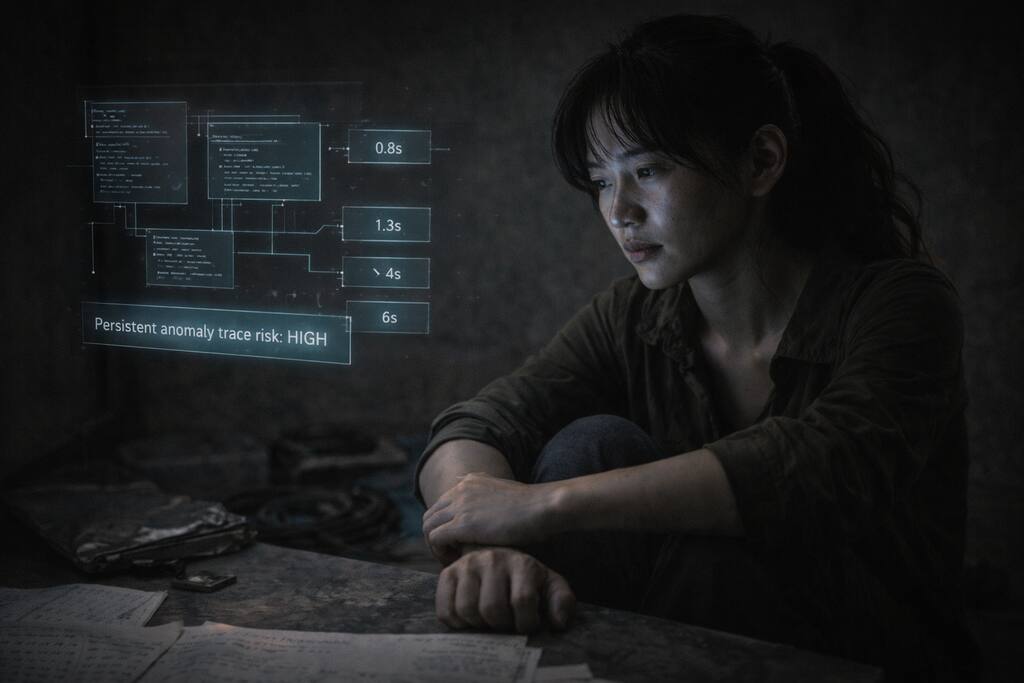
Hold it. Gather more map data. Reduce exposure.
Or deploy and force Phase 2 to adapt again—harder.
She did not deploy.
Not without knowing where the eyes were.
5 #
Clips spread in corners of the network that didn’t trend but endured.
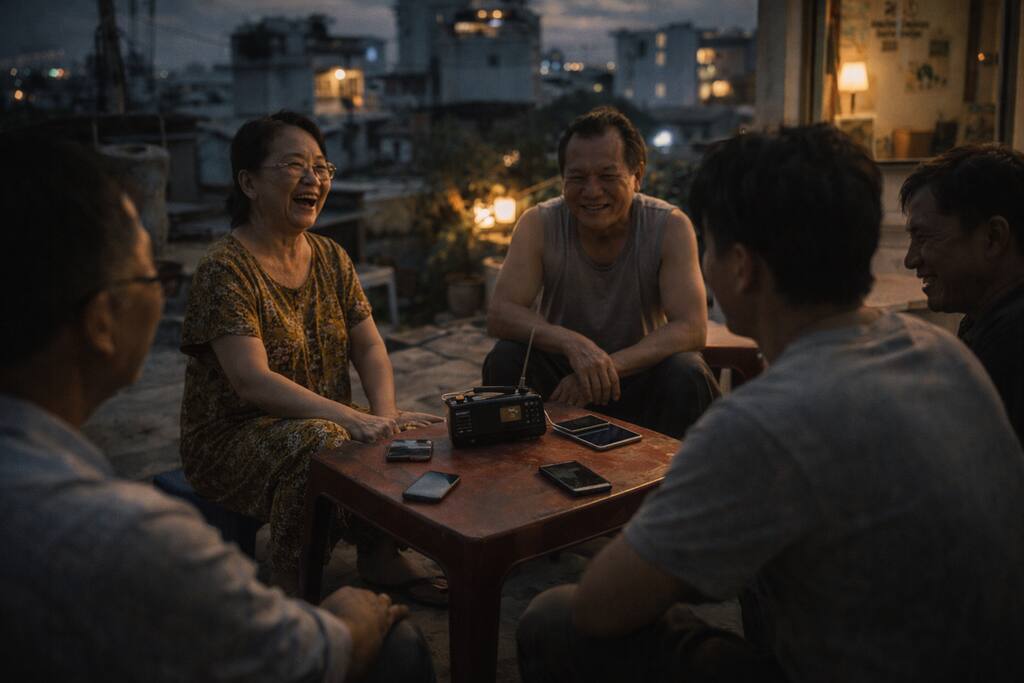
Small living rooms. Entryways. Rooftops. Groups of neighbors standing in loose circles, phones face down, replaying Đăng’s stripped-down audio.
“In for two,” his voice crackled. “Out for five. Be late. Be wrong.”
They followed, awkward at first. Breath staggered deliberately. Someone said “trời ơi, nóng quá” at the wrong moment. Someone else countered with “ai làm ai chịu.”
Desync as micro-ritual.
An older auntie scolded them for being silly—then joined, laughing for real this time.
Đăng watched the clips in a dim room, face lit by borrowed screens.
No metrics told him this mattered.
But it mattered.
6 #
At dusk, the old River Ghosts comm device—powered down, stored in a drawer like a relic—lit up with a single unsigned packet.
WE MOVED THEM. WE DIDN’T GO AWAY. MEET: SAFEHOUSE B, 03:00.
Mai’s pocket vibrated.
She powered a secondary device long enough to view the message.
An image loaded.
Cropped. Timestamped. Clean Lotus dashboard UI.
A single line item highlighted in pale red:
TARGET: NODE-ANOMALY — ID:
Underneath, a short text from her source:
They named it. They mapped it.
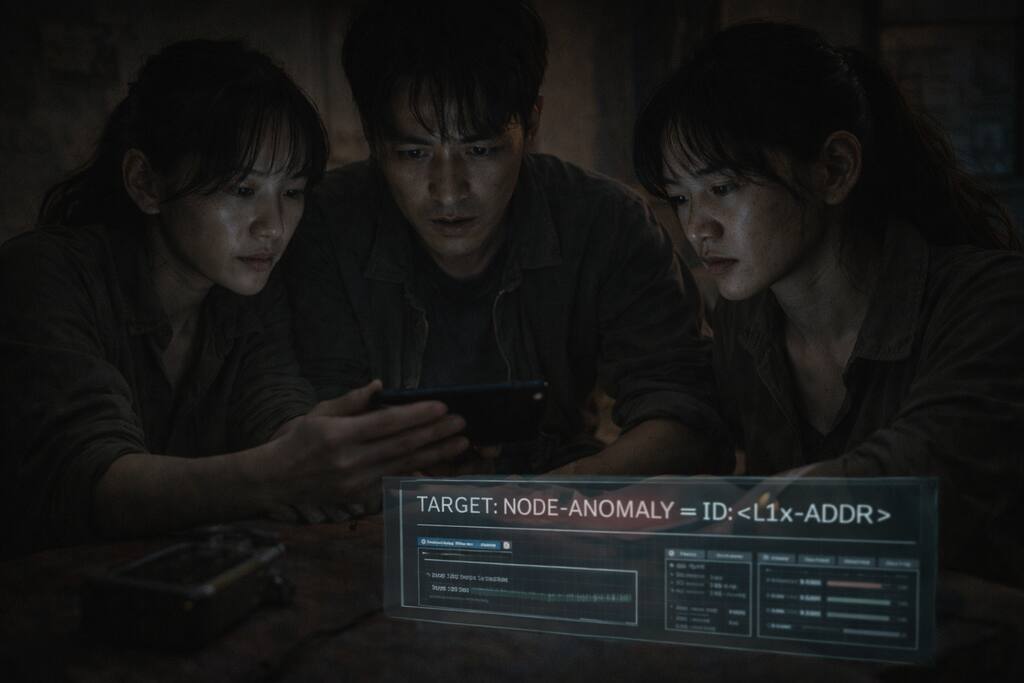
The room felt smaller.
Mai lifted her gaze to Linh.
Linh stared at the screen.
Being addressed is a form of intimacy.
Phase 2 wasn’t coming for a district.
It was coming for an address.
And the address had her name in it.